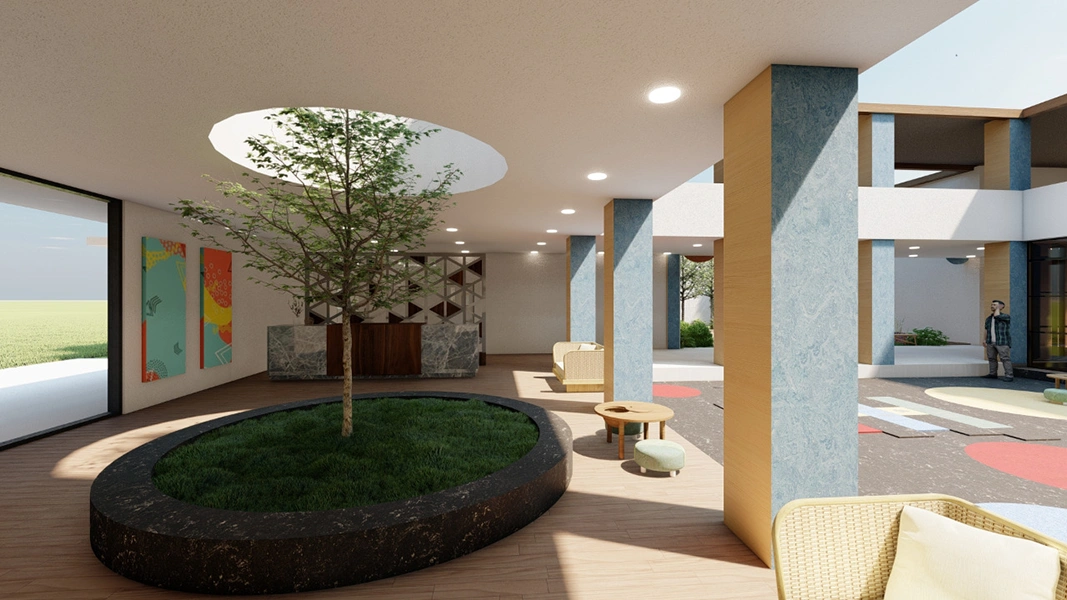
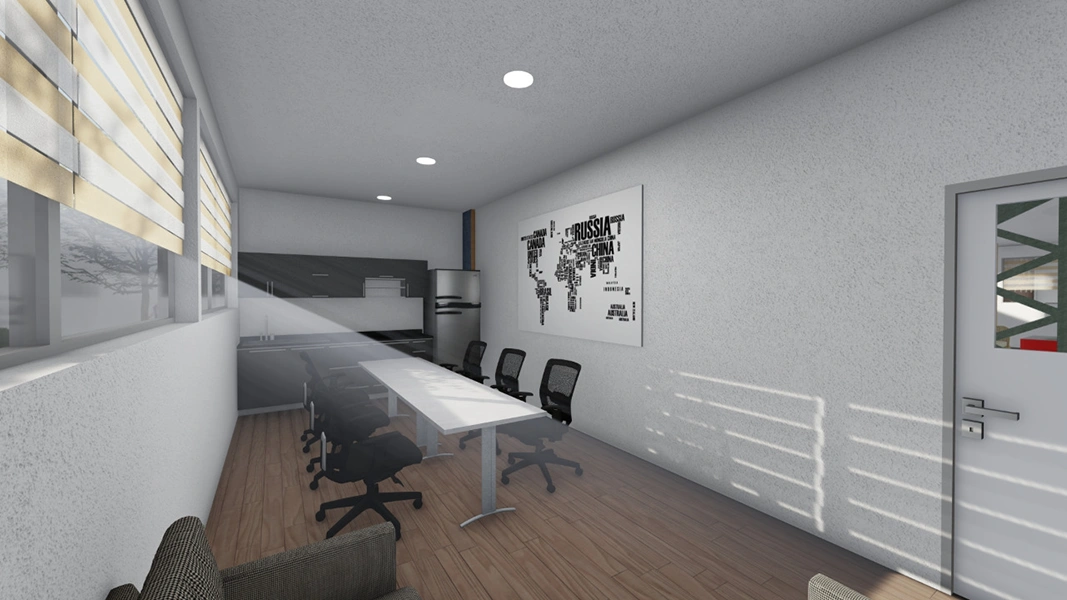
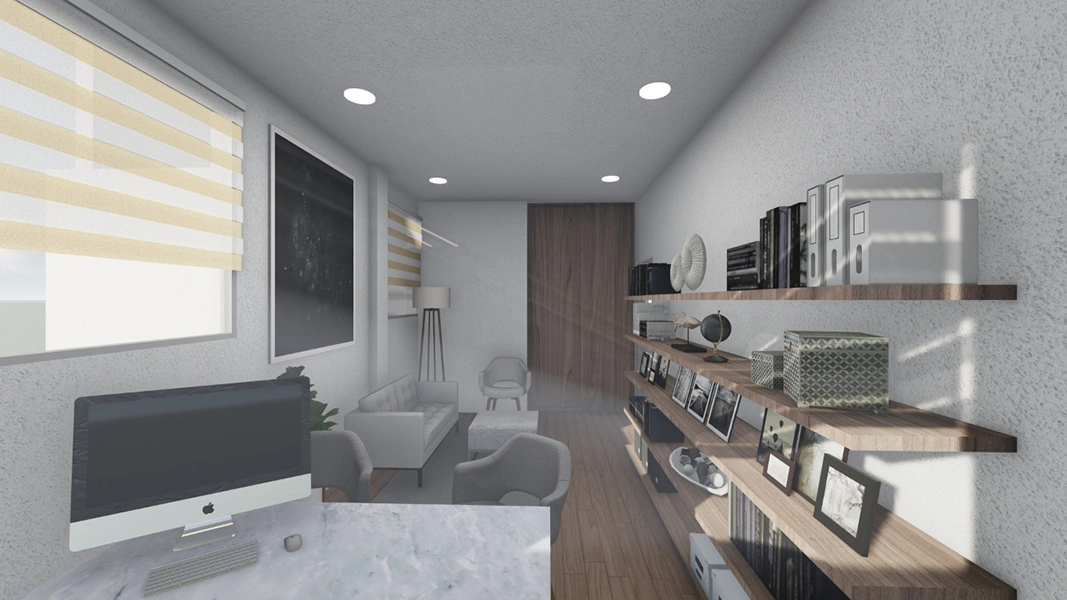
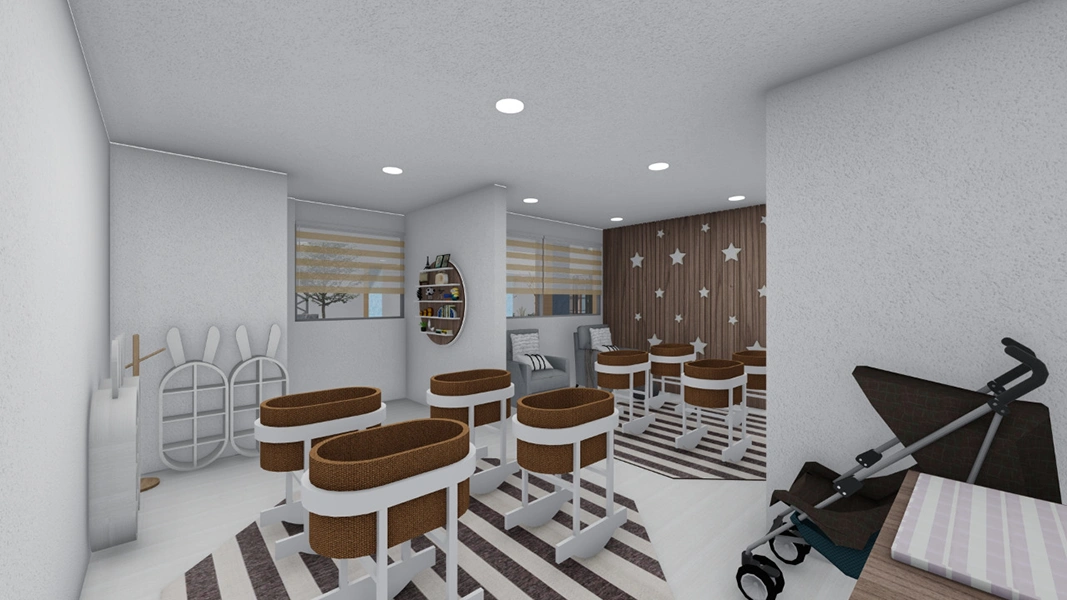
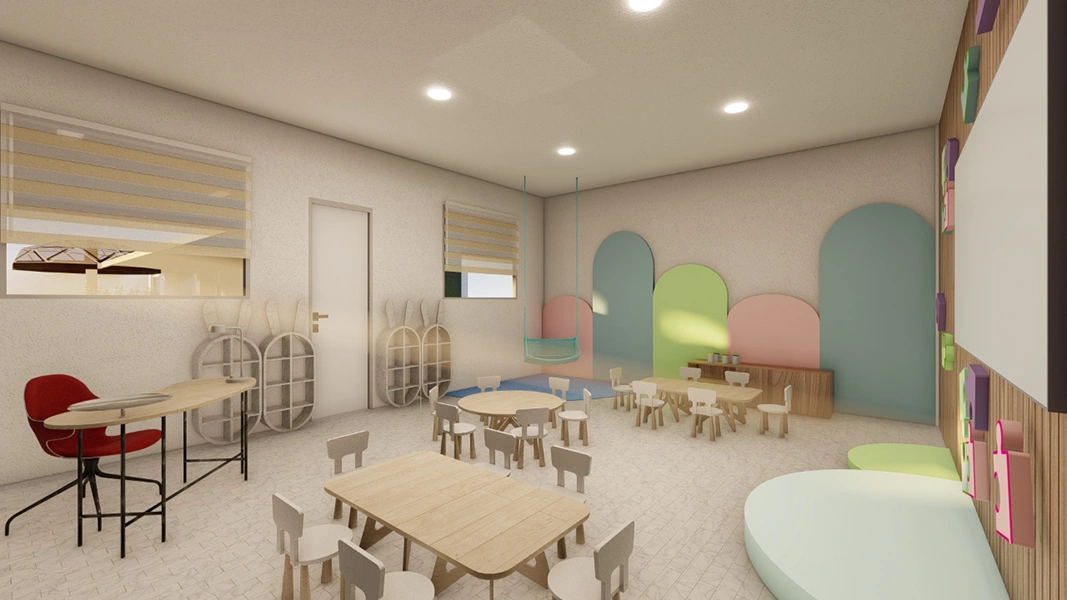
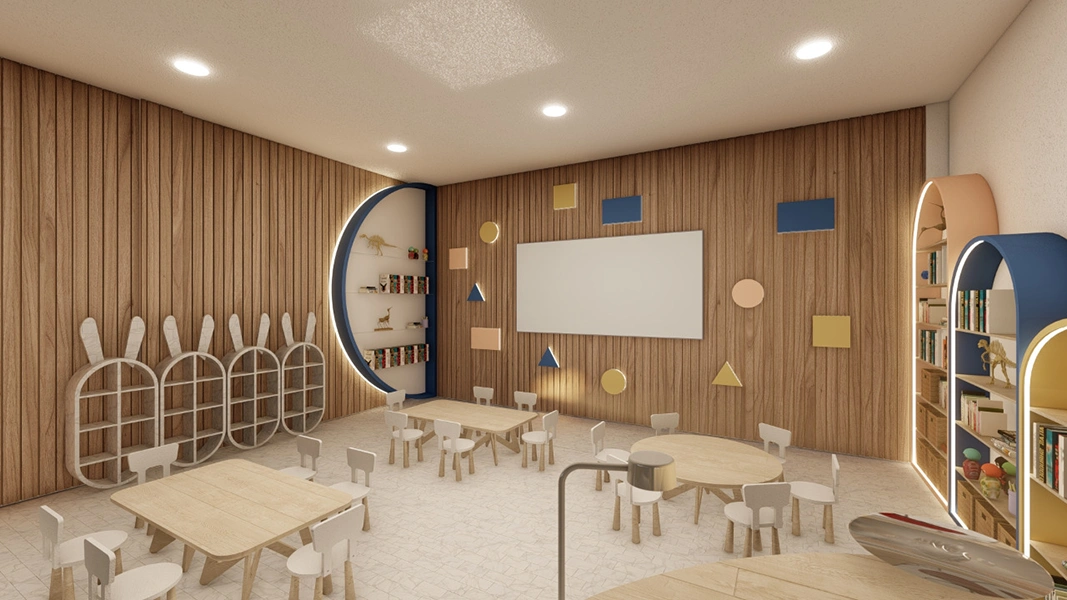
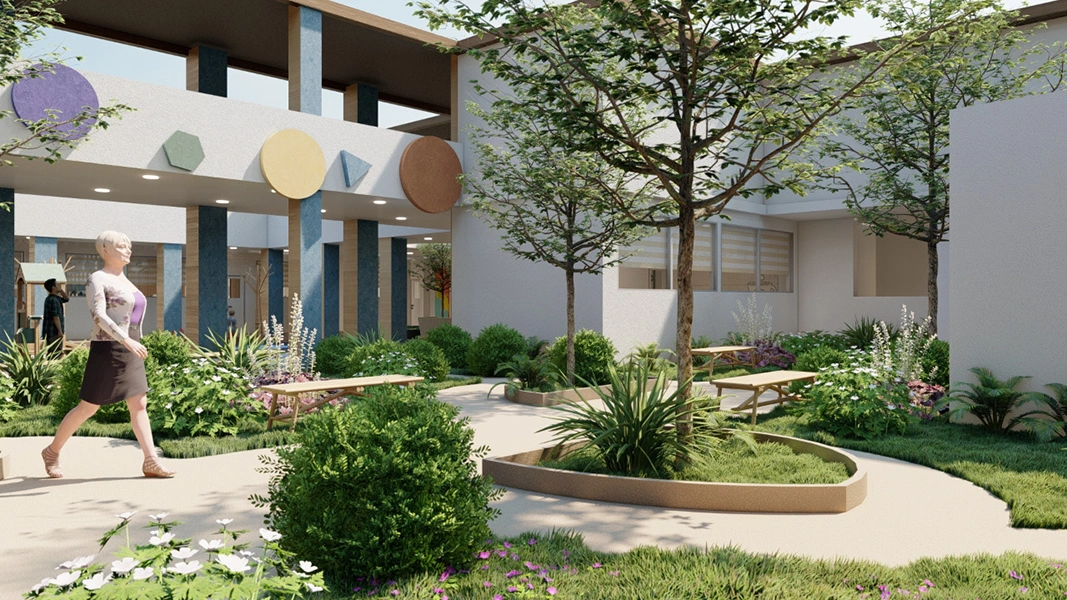
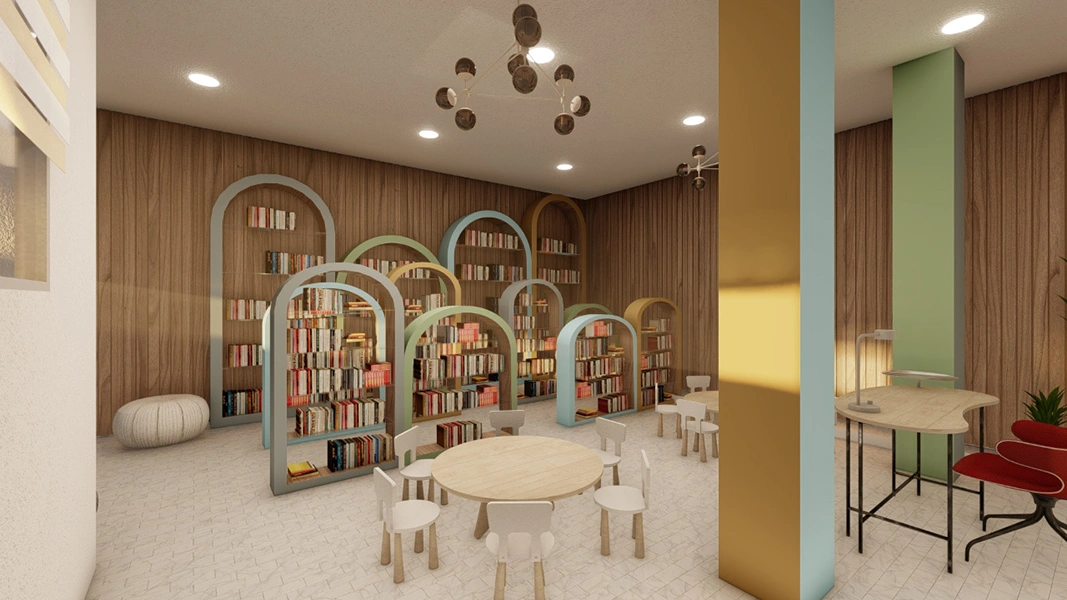
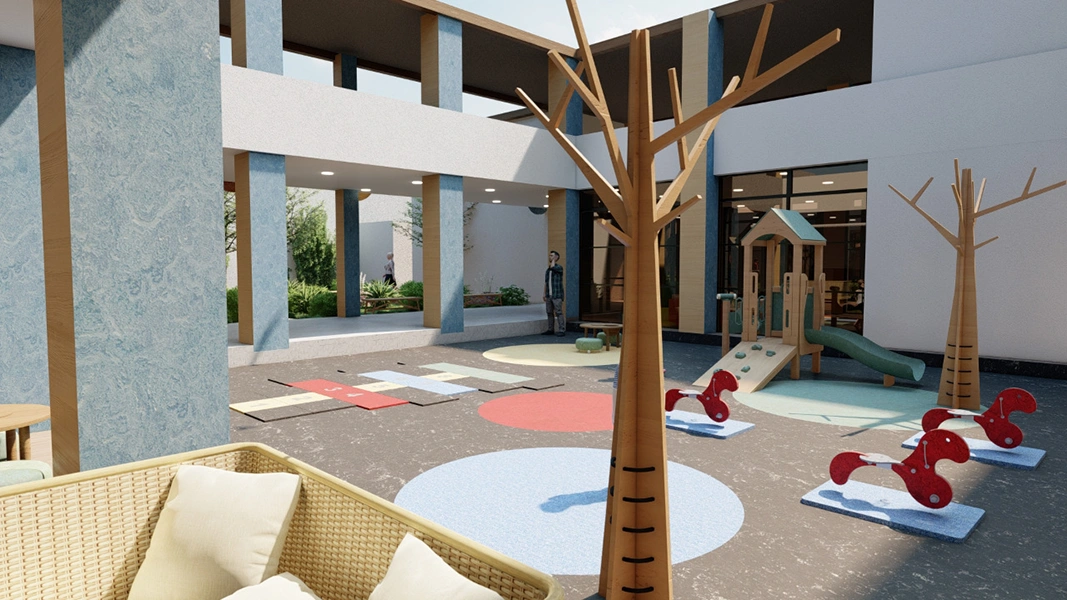
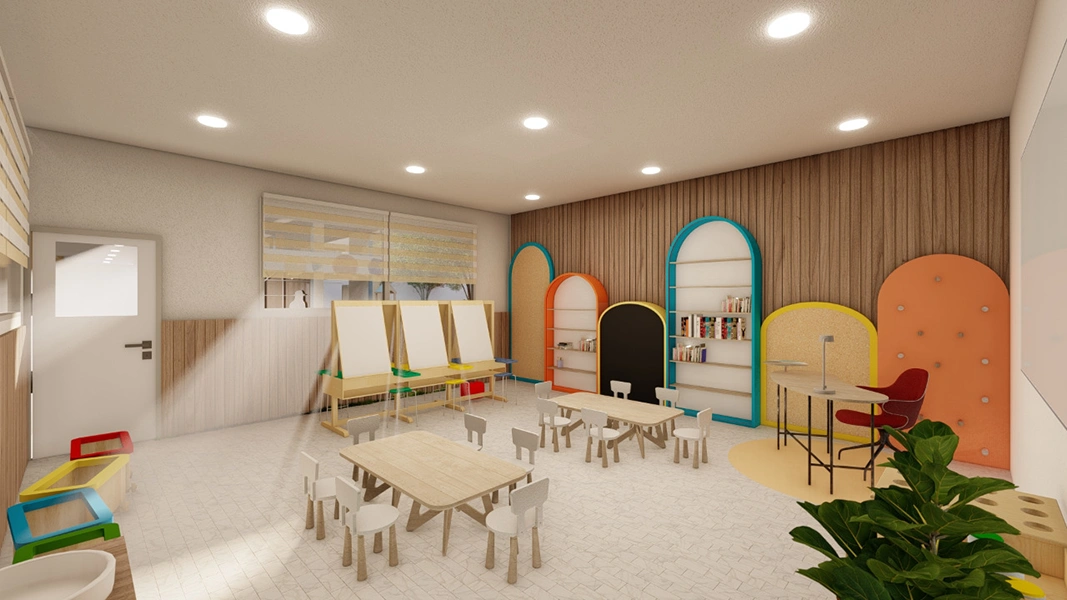
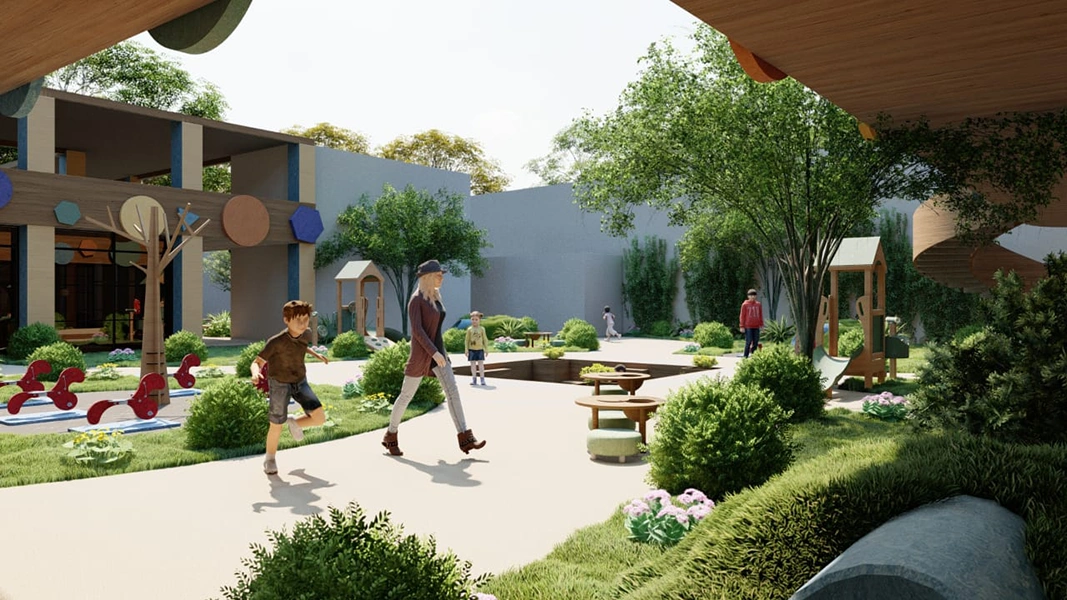
This daycare project was conceived as an integral learning, play and discovery environment for early childhood. From interior design to the landscaping proposal, every decision was made under principles of sensitivity, functionality and sensory stimulation. The project's focus centers on creating a safe, playful, natural and stimulating space, where children can explore, learn and develop at their own pace.
The formal design language combines soft lines and friendly curves with a color palette based on pastel tones, complemented by strategically incorporated vibrant accents. Geometric and organic shapes are integrated into walls, shelves and ceilings, generating a dynamic visual environment without falling into overstimulation. Graphic elements such as honeycombs, bees, puzzle-type figures and colorful arches fulfill a dual function: aesthetic and didactic.
Warm, resistant and safe materials suitable for children's interaction were selected. Light wood, washable surfaces, rounded corners and matte finishes predominate in walls and furniture. Low-shine ceramic flooring facilitates cleaning and reduces slipping risk. Reading areas incorporate accessible bookshelves with lacquered MDF arches in soft colors, while classrooms have natural wood ergonomic furniture, designed to encourage autonomous learning, exploration and collaborative work.
The landscaping proposal prioritizes the use of non-toxic and low-maintenance species, such as lavender, lantanas, white daisies, agapanthus and ornamental grasses, promoting direct contact with nature. Curved paths, grass areas for free crawling and elevated planters functioning as symbolic play scenarios were designed. Carefully selected shade trees contribute to regulating patio temperature and favor outdoor learning. Play structures made with natural materials like wood were also integrated, along with floor educational games in recycled colored vinyl.
The daycare is organized from versatile interior spaces that include classrooms, library, reading room, play areas and rest zones. Open spaces are visually and functionally linked to the exterior through wide windows and fluid paths. The central patio acts as the project's active nucleus, fostering coexistence, free play and constant connection with the natural environment.
Every element of the project was conceived with the intention of enriching children's cognitive, emotional and social development. The result is a space that not only responds to functional needs, but is also perceived as a loving, creative environment full of possibilities for imagining, learning and growing.

I create harmonic spaces that reflect the essence of each person. I integrate natural elements with aesthetic and functional design.